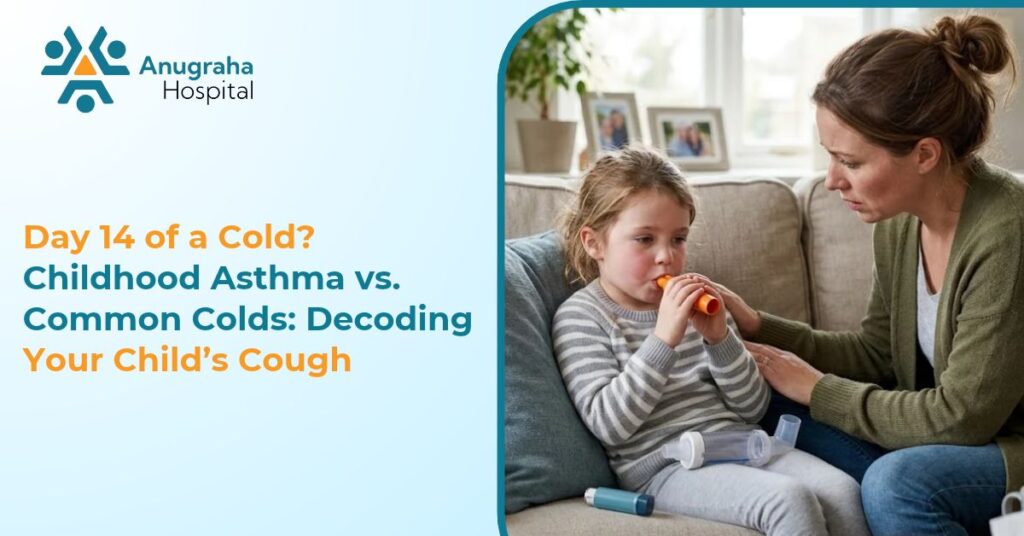
Your child’s fever has gone and the runny nose has dripped up. Yet the cough is still breaking up every night’s sleep, and now you are left wondering whether this is a stubborn post-viral cough, a fresh infection, or an early sign of childhood asthma.
A cough lasting 14 days does not automatically mean asthma. Still, how the cough behaves, when it appears and what other symptoms come along with it deserve careful attention. This blog helps you read those cues and decide when it is time to see a doctor.
Table of Contents
|
How Long Should a Common Cold Cough Last in Children?
A common cold is a viral infection of the nose and throat. Fever and body ache usually fade within three to five days, and the runny nose clears within a week or so. The cough is different. It often lingers because the airway lining stays irritated and sensitive long after the virus has gone.
Most childhood coughs of this kind improve within two to three weeks, although some post-infectious coughs last longer. What matters is the direction of travel. A cough that is slowly easing is a reassuring one that is worsening returning after a few good days, or disturbing sleep and play needs a closer look. Duration is important. On its own, though, it cannot tell you the cause.
Childhood Asthma vs. a Common Cold: What Should Parents Look For?
Childhood asthma is a long-term condition in which the airways become inflamed and narrow, leading to repeated episodes of cough, wheezing, and breathlessness. The patterns below can guide your observations. They are not diagnostic tests.
Signs More Consistent with a Lingering Cold
- The cough began along with a runny nose, sore throat or other cold symptoms.
- Symptoms are gradually improving, even if the cough remains.
- The cough follows a recent respiratory infection and is often wet or ratty, as mucus clears.
Patterns That May Suggest Childhood Asthma
- Repeated episodes of coughing, wheezing, or breathlessness.
- A dry, tickly cough that becomes more noticeable at night, during exercise, or with certain triggers.
- Symptoms that return after the child has apparently recovered from respiratory infections.
If you compare dry cough vs wet cough in kids then you’ll notice that they are different. Children with asthma catch colds too, and viral infections often trigger their symptoms. Equally, no wheezing does not mean no asthma.
Why the Cough Pattern Matters More Than Day 14 Alone
Instead of counting days, observe the pattern. Note when the cough occurs, how often it returns and whether your child is otherwise recovering well. Write down night-time waking, coughing during running or play, wheezing, difficulty in breathing and any similar episodes in the past.
Pediatricians ask about these too, along with coughing after laughing or crying, because they are early signs of asthma in toddlers. A family history of asthma or allergies is helpful for your pediatrician. It is not proof of a diagnosis. Other causes, such as post-infectious cough, allergies and different respiratory conditions, may also need to be considered.
When Should You Take Your Child to a Pediatrician?
Signs That Need Medical Assessment
Knowing when to see a pediatrician for a child’s cough saves both worry and time. Arrange a consultation if the cough persists without improvement, keeps returning, disturbs sleep or comes with wheezing. A cough lasting beyond three weeks warrants medical review. Concerning symptoms should be assessed even sooner.
When Breathing Trouble Is an Emergency
Seek emergency medical care immediately if your child is struggling to breathe, if the ribs pull in with every breath, or if the lips look bluish. The same applies when your child cannot speak, cry or drink because of breathlessness. Do not wait for the next day’s appointment.
How Is Childhood Asthma Diagnosed?
Your pediatrician will begin with a detailed history, covering the symptom pattern, triggers, previous episodes and family history, followed by a physical examination. Children old enough to cooperate, usually around five years and above, may undergo spirometry.
It is a simple breathing test that measures how much air they can blow out and how fast. In younger children, childhood asthma diagnosis rests on symptom patterns, clinical assessment, response to prescribed treatment and ruling out other causes. No single symptom or home observation can confirm asthma. That is why a proper assessment is essential.
What Can Parents Do While the Cause Is Being Assessed?
- Encourage plenty of fluids and rest, along with age-appropriate supportive care for cold symptoms.
- Do not give over-the-counter cough and cold medicines to children under six unless a healthcare professional advises it.
- Keep your child away from tobacco smoke, and note whether dust, pollution, exercise or other exposures coincide with the cough.
- Avoid starting antibiotics, inhalers or asthma medicines on your own without visiting the best pediatric hospital in Chennai.
- If asthma is already diagnosed, follow your child’s prescribed asthma action plan.
Concluding Words
A lingering cough after a cold is among the most common reasons parents lose sleep. In most cases, it is simply the airway settling after a viral infection. Two weeks of coughing does not automatically mean childhood asthma.
What deserves attention is a repeated pattern: coughing that returns again and again, wakes your child at night, appears with play or exercise, or comes with wheezing and breathing difficulty. Keep a simple record of these details, because they help the doctor far more than a count of days.
If the cough persists, worsens or keeps recurring, do not wait it out. Book a consultation with a pediatrician at Anugraha Hospital to understand the cause of your child’s cough and discuss the appropriate next steps.
FAQs
Can childhood asthma start with a common cold?
Yes. Viral infections often trigger childhood asthma symptoms, so repeated post-cold coughing or wheezing deserves a pediatric review.
Can a child have asthma without wheezing?
Yes. Some children have only a persistent dry cough, especially at night or after exercise, so the absence of wheezing does not rule asthma out.
How many days should a child’s cough last after a cold?
Most improve within two to three weeks. A cough that is worsening, recurring or lasting beyond three weeks should be medically assessed.
Can a persistent cough alone indicate asthma?
Not by itself. Allergies and post-infectious cough are also common causes, so the doctor looks at the full pattern, triggers and history.