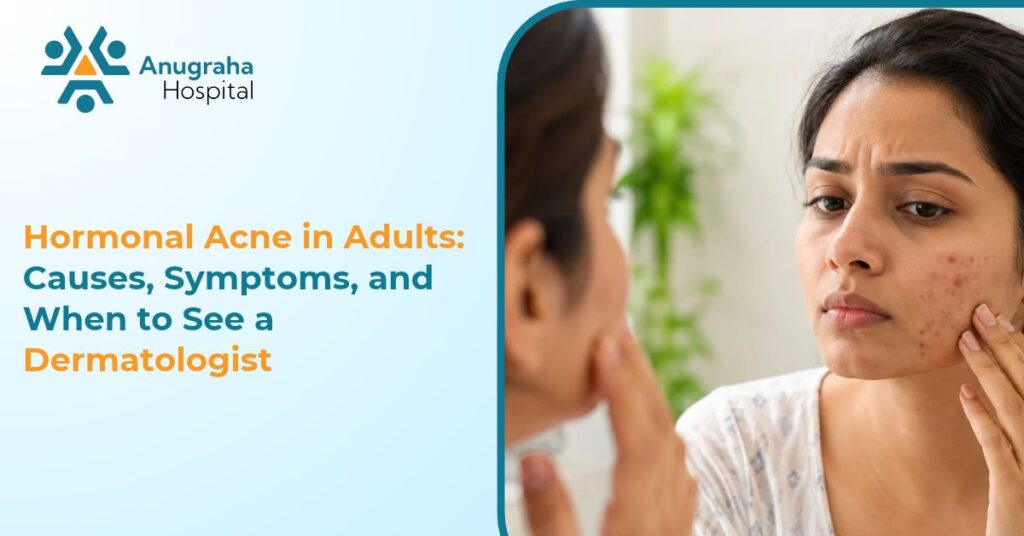
You have left your teenage years behind, yet painful breakouts still appear along your chin, jawline or cheeks, often just when you least want them. It is natural to wonder what you are doing wrong.
The reassuring answer is that hormonal acne in adults is rarely caused by poor hygiene or an unsuitable skincare routine. Hormonal fluctuations are a common trigger, particularly in women. In this blog, we explain the causes of hormonal acne, its symptoms, the treatment options available and the signs that it is time to see a dermatologist.
Table of Contents
|
What Is Hormonal Acne and Why Does It Develop in Adults?
Hormonal acne is acne driven largely by changes in hormone levels, especially androgens. These hormones influence how much sebum, your skin’s natural oil, is produced.
When excess sebum combines with dead skin cells and bacteria, pores get clogged and become inflamed. Unlike an occasional pimple caused by a new cosmetic or humid weather, hormonal acne tends to recur, and it can affect adults of different ages, not just teenagers.
Why Hormones Trigger Breakouts
Androgens stimulate the sebaceous glands, increasing oil production. This is why acne can persist even when you follow a consistent skincare routine. Cleansers and moisturisers work on the surface, while the trigger often lies deeper within the body.
Common Causes of Hormonal Acne in Adults
Several factors can trigger or worsen hormonal breakouts, and they often work together as internal triggers for stubborn adult acne.
Menstrual Cycle and Hormonal Fluctuations
Many women notice breakouts a few days before their period. Hormone levels rise and fall through the menstrual cycle, and the premenstrual shift can increase oil production and inflammation.
PCOS and Other Hormonal Conditions
Polycystic ovary syndrome (PCOS) is closely linked with elevated androgen levels and persistent acne. Symptoms to look out for include irregular periods, excess facial hair and thinning of scalp hair. If acne appears alongside any of these, a medical evaluation is advisable.
Stress, Sleep and Other Triggers
Stress-related hormonal changes can aggravate acne. Inadequate sleep and certain medications may also play a role. Heavy or comedogenic skincare products can worsen existing breakouts too, although they are not usually the underlying hormonal cause.
Water, Constipation, Gut Health and Fibre: The Overlooked Link
What happens inside your gut can show up on your skin. Research on the gut-skin connection is still developing, but many dermatologists now recognise that gut health, hydration and diet can influence acne alongside hormones.
Water and Hydration
Adequate water intake supports normal skin function and healthy digestion. Drinking more water will not cure hormonal acne by itself, but chronic dehydration can leave skin dull and make it more reactive.
Constipation and the Gut Microbiome
Your gut houses trillions of bacteria, collectively called the microbiome. When this balance is disturbed, as it can be with persistent constipation, poor diet or repeated antibiotic use, it may increase inflammation in the body and aggravate acne in some people.
Constipation does not directly cause acne, but long-standing digestive problems alongside stubborn breakouts deserve attention.
Dietary Fibre
Fibre keeps digestion regular and nourishes beneficial gut bacteria. It also slows sugar release into the blood. High-sugar, refined diets can raise insulin levels, which in turn may increase androgen activity and oil production.
Dals, vegetables, fruits, oats, ragi, and whole grains are good everyday sources, and curd may help support gut balance. These measures work best as support, alongside medical treatment and not in place of it.
How to Recognise Hormonal Acne: Symptoms to Watch For
Hormonal acne usually follows a recurring pattern and looks different from the occasional whitehead or blackhead. Understanding jawline cystic acne causes begins with spotting these common signs:
- Deep, painful cysts or inflammatory pimples beneath the skin
- Breakouts concentrated around the chin, jawline, and lower cheeks
- Recurring flare-ups around menstruation
- Tender bumps that take longer to heal
- Persistent acne followed by dark spots or scarring
Keep in mind that location alone cannot confirm hormonal acne. A dermatologist considers your breakout pattern, medical history, and other symptoms before making a diagnosis.
How Is Hormonal Acne Treated?
Treatment depends on the severity of acne, hormonal triggers, skin type, and medical history. Repeatedly switching skincare products rarely helps, because it does not address the underlying cause.
Topical Treatments for Mild to Moderate Acne
- Retinoids, such as adapalene, help prevent clogged pores.
- Benzoyl peroxide reduces acne-causing bacteria and inflammation.
- Azelaic acid helps manage acne and post-acne pigmentation.
Choosing products suited to your individual skin needs is important, as the wrong formulation can cause dryness or irritation.
Prescription Treatments for Persistent Breakouts
Where medically appropriate, doctors may prescribe hormonal treatments such as spironolactone or combined oral contraceptives. Their suitability depends entirely on individual health factors. Severe nodular or cystic acne may need other prescription treatments as well.
Why a Personalised Treatment Plan Matters
Hormonal medication should never be self-prescribed. A proper assessment ensures the treatment is safe and effective for you. Visible improvement usually takes several weeks to a few months, so patience and follow-up matter.
When Should You See a Dermatologist for Hormonal Acne?
Knowing when to visit a skin specialist for acne can save you from long-term marks. When home skincare is no longer enough, early treatment helps prevent permanent scars and persistent pigmentation. Do not ignore these signs:
- Deep, painful or recurring cystic acne
- Breakouts that do not improve after consistent acne treatment
- Acne leaving scars or dark marks
- Sudden adult acne with irregular periods or excess facial hair
- Acne that affects your confidence or everyday life
If any of these sound familiar, book a consultation rather than waiting for the condition to settle on its own.
What to Expect During a Dermatologist Consultation
A dermatologist will assess acne severity, breakout patterns, medical history and the skincare products you currently use. If hormonal symptoms are present, additional assessment or blood tests may be suggested.
Recommendations may include topical medication, prescription treatment or referral for hormonal evaluation. Follow-up appointments help monitor progress and adjust your plan as your skin responds.
Concluding Words
Adult hormonal acne can feel frustrating, especially when every new cleanser or serum promises results and delivers none. The reality is that these breakouts are rooted in internal triggers such as hormonal shifts, PCOS, stress and sleep, which no skincare product alone can correct. With the right diagnosis and a personalised plan, hormonal acne is very much manageable.
Treating only the visible pimples, while the underlying cause stays untouched, simply delays improvement and raises the risk of scarring and dark marks. The sooner the cause is identified, the sooner your skin can begin to heal.
If you are dealing with persistent, painful or recurring acne, consult a qualified dermatologist at Anugraha Hospital. Whether you are searching for the best dermatologist in Chennai or simply want clarity on your skin, the right treatment plan can make a real difference. Visit us today.
FAQs
Can hormonal acne start in your 30s or 40s?
Yes. Hormonal changes linked to PCOS, stress or the perimenopausal phase can trigger acne for the first time in adulthood.
How do I know if my acne is hormonal or bacterial?
Hormonal acne is typically deep, tender and recurring around the jawline and chin, often with a menstrual pattern. A dermatologist can confirm the cause.
Can hormonal acne be treated permanently?
It can be controlled effectively, though ongoing management is sometimes needed as hormones fluctuate.
Which skincare ingredients work best for hormonal acne?
Adapalene, benzoyl peroxide and azelaic acid are commonly used. Ask your dermatologist which suits your skin.